Cellular factory
Robotic production built for Mantis
All3’s cellular factory produces custom building components through 90% automated robotic fabrication. Unlike traditional prefabrication built around repetition, our modular production cells manufacture unique elements engineered specifically for robotic assembly - featuring plug-and-play interfaces and embedded systems. This is robotic production designed from the outset to support autonomous construction.
All3 software development team during a white-boarding session
Key features
- Modular robotic cells: Software-controlled production units that reconfigure instantly for unique components without manual intervention.
- Laser-guided precision: Fabrication accuracy of 0.2 mm ensures components align perfectly for autonomous installation by Mantis.
- Adaptive production: Real-time scanning and feedback eliminate the accumulation of small deviations across long production sequences.
- Zero manual intervention: All fabrication processes are controlled end-to-end by proprietary software, removing human error and ensuring consistent, build-ready quality.
“Our software-controlled robotic cells reconfigure instantly for each individual component. All fabrication operations run autonomously, eliminating human error and ensuring consistent, build-ready quality across completely custom designs.”

Slava Bocharov,
co-founder All3
How our cellular factory works
From design to component
Once a building model is approved, it's automatically translated into production programmes for robotic fabrication. Each programme defines the sequence of operations required for a specific element - accommodating full design variability.
Production logic comes directly from the integrated building model. Every structural and non-structural component is specified at component level, removing any manual re-interpretation between design and fabrication.
Modular cell architecture
Production is based on modular robotic cells working as self-sufficient units. Each cell performs a specific function - milling, drilling, mounting - but can be reprogrammed instantly for different tasks.
Like a microprocessor running different software, the same hardware platform produces infinite outputs through code. Columns, beams, slabs, façade panels, and walls with integrated insulation, acoustic layers, and MEP provisions are fabricated on the same cells, switching seamlessly between designs while maintaining industrial productivity.
Together, these factors enable All3 to offer a guaranteed minimum 10% cost reduction, with pricing fixed at contract stage.
For developers, this level of certainty can turn marginal opportunities into viable projects.
Adaptive production (patented)
One of prefab's biggest challenges is how small deviations accumulate during production, compounding into major on-site rework.
All3 combines laser-guided precision (0.2mm accuracy) with patented adaptive production to eliminate this problem almost entirely:
- Each component is scanned after fabrication
- Data updates the digital model in real time
- Subsequent parts are automatically recalculated and adjusted before production
- The system continuously self-corrects to ensure minimal accumulation of imperfections
If one element is 2 mm out, the next is corrected by 2 mm. Even across thousands of components, final deviation is limited to that of the last element produced.
This level of precision is what makes reliable robotic assembly possible.
Incremental, distributed production
Traditional prefabrication relies on large, capital-intensive megafactories optimised for standardised output, making them slow to adapt and expensive to scale.
All3’s cellular approach scales incrementally, not monolithically. Production capacity increases by adding individual robotic cells as demand grows - without building entirely new facilities or committing to oversized upfront infrastructure.
A single 10,000 m² All3 facility, operated by just 20 employees, can fabricate up to 150,000 m² of living space annually, with 90% automation from day one. Capacity then grows cell by cell, aligned with project pipelines and regional demand.
This is industrial manufacturing designed to scale at the pace cities actually build.
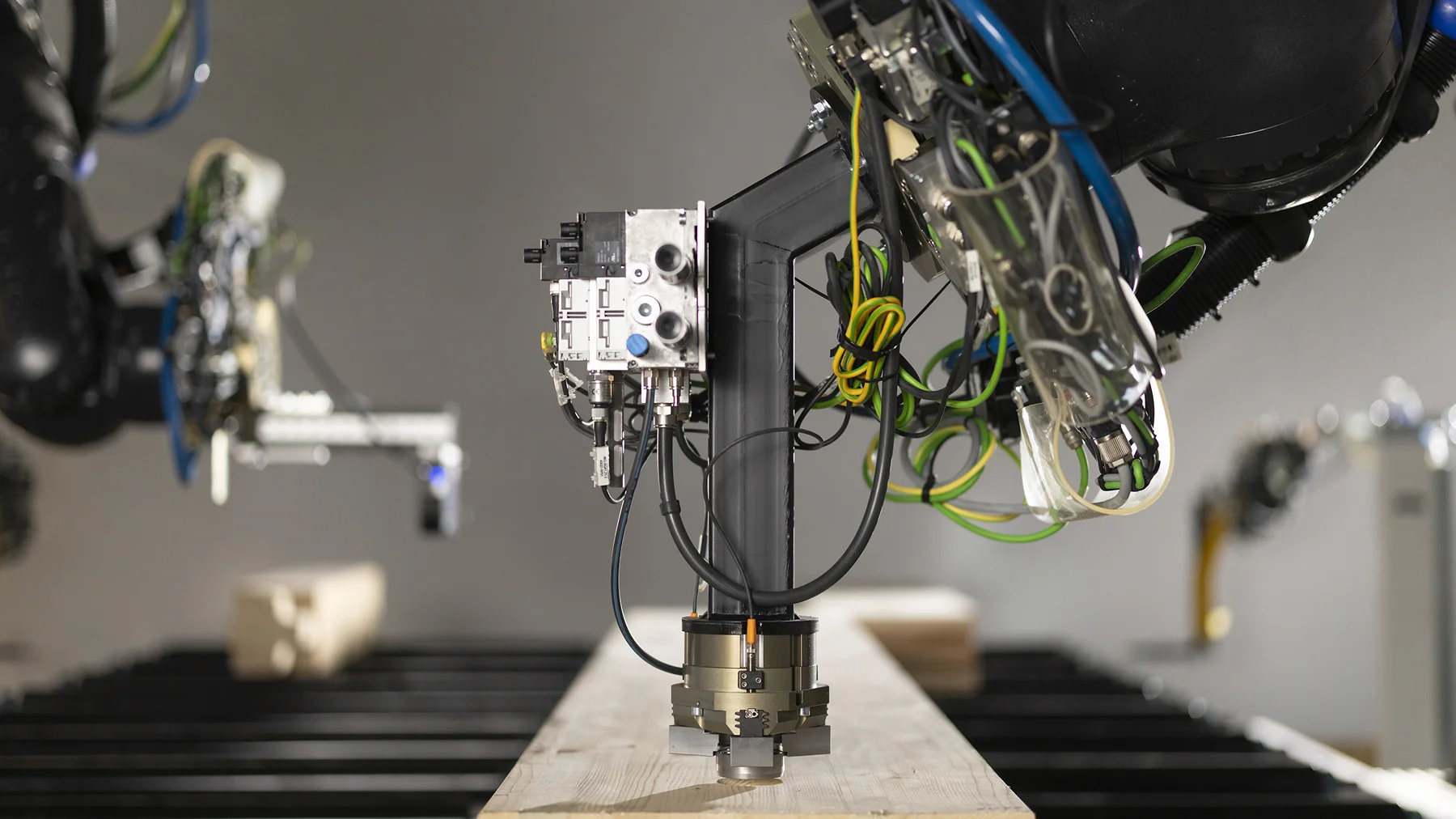
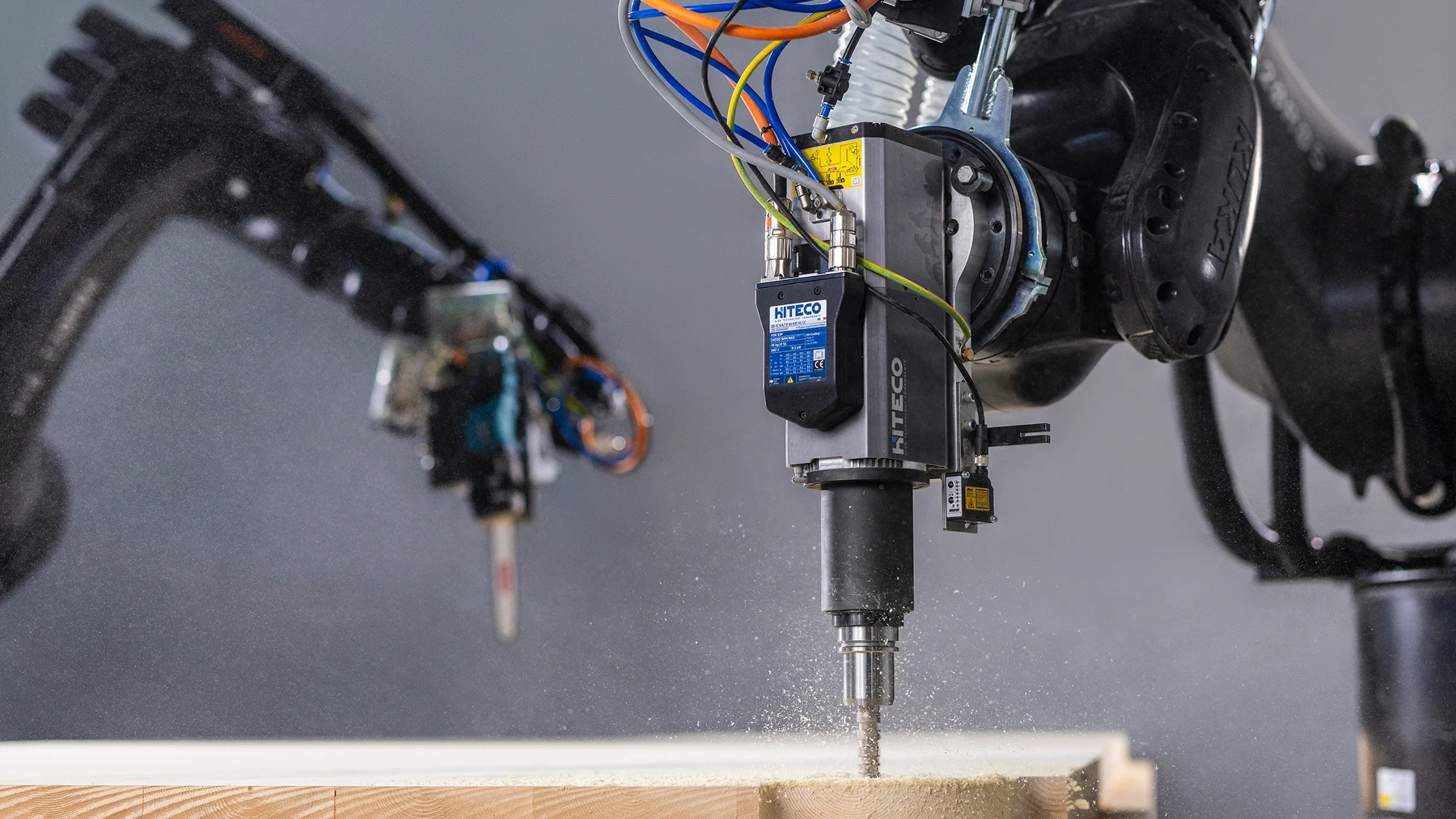
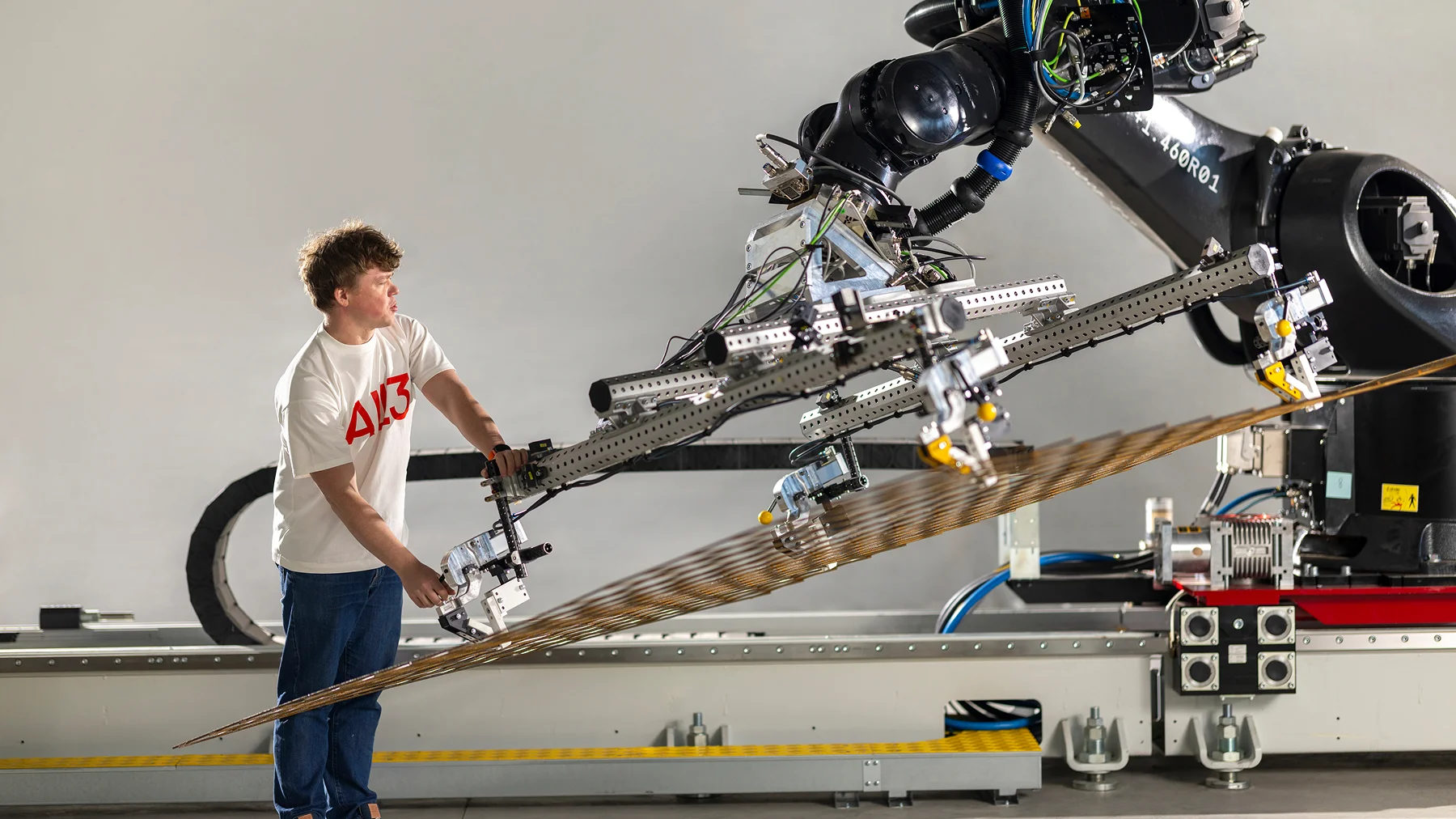
Robotic cell executing the milling process
Robotic cell executing the milling process
Robotic cell inspection in All3's factory
Robotic cell mounting a plug-and-play connector
Benefits of cellular production
- Custom components without cost premium: Software-controlled cells produce unique elements as efficiently as standardised units, bringing prefabrication to complex urban sites
- Precision at scale: Laser-guided accuracy with patented adaptive production eliminates on-site rework and enables robotic assembly
- Rapid deployment: Facilities operational in six months vs years for conventional factories
- Scalable infrastructure: Production capacity expands incrementally by adding cells, not rebuilding factories
- Distributed manufacturing: Regional facilities serve local markets, reducing logistics costs and enabling just-in-time delivery.
Read more about All3 integrated technology
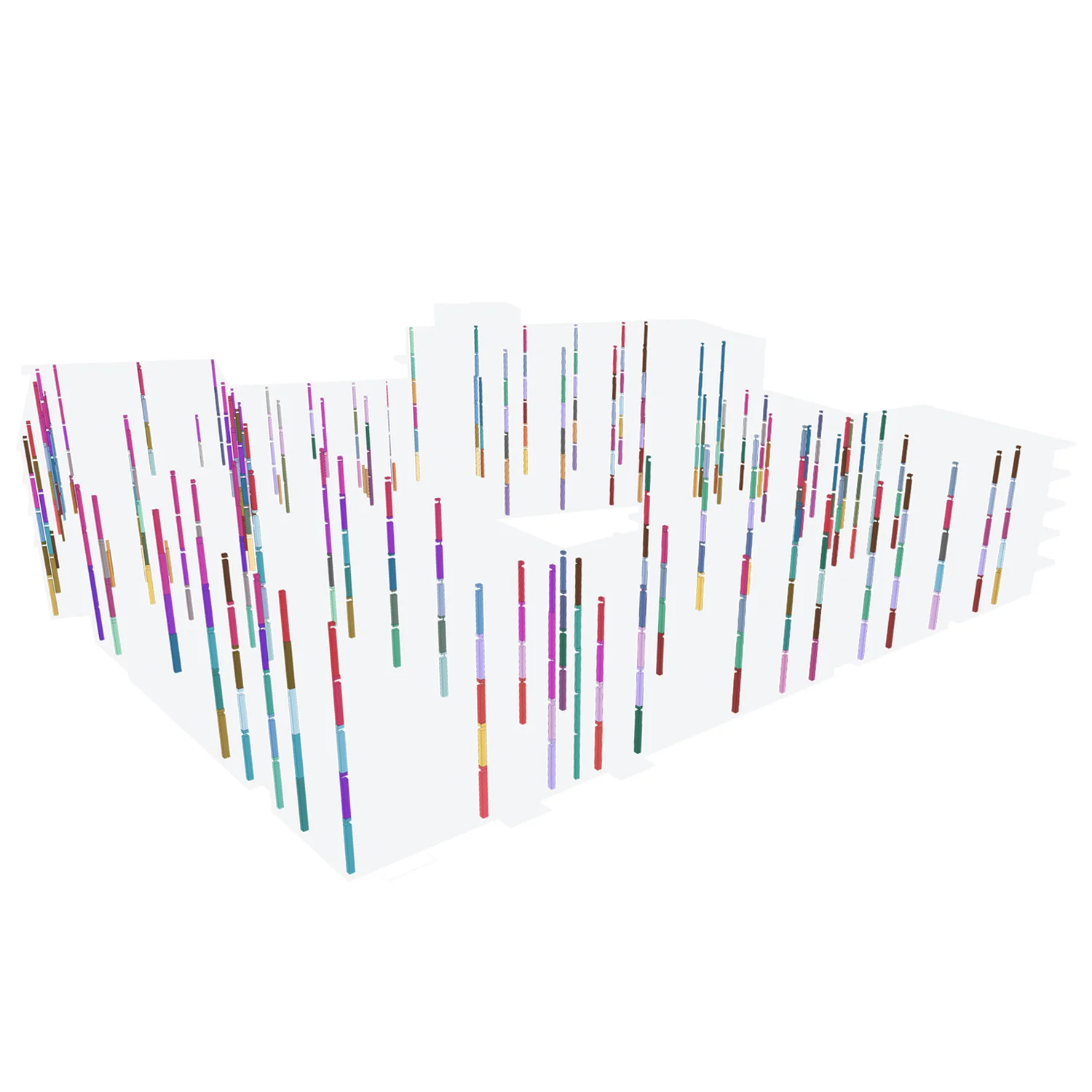
Real Time Architecture
Our AI-powered design platform, generating error-free digital building models optimised for robotic assembly.
Explore Real Time Architecture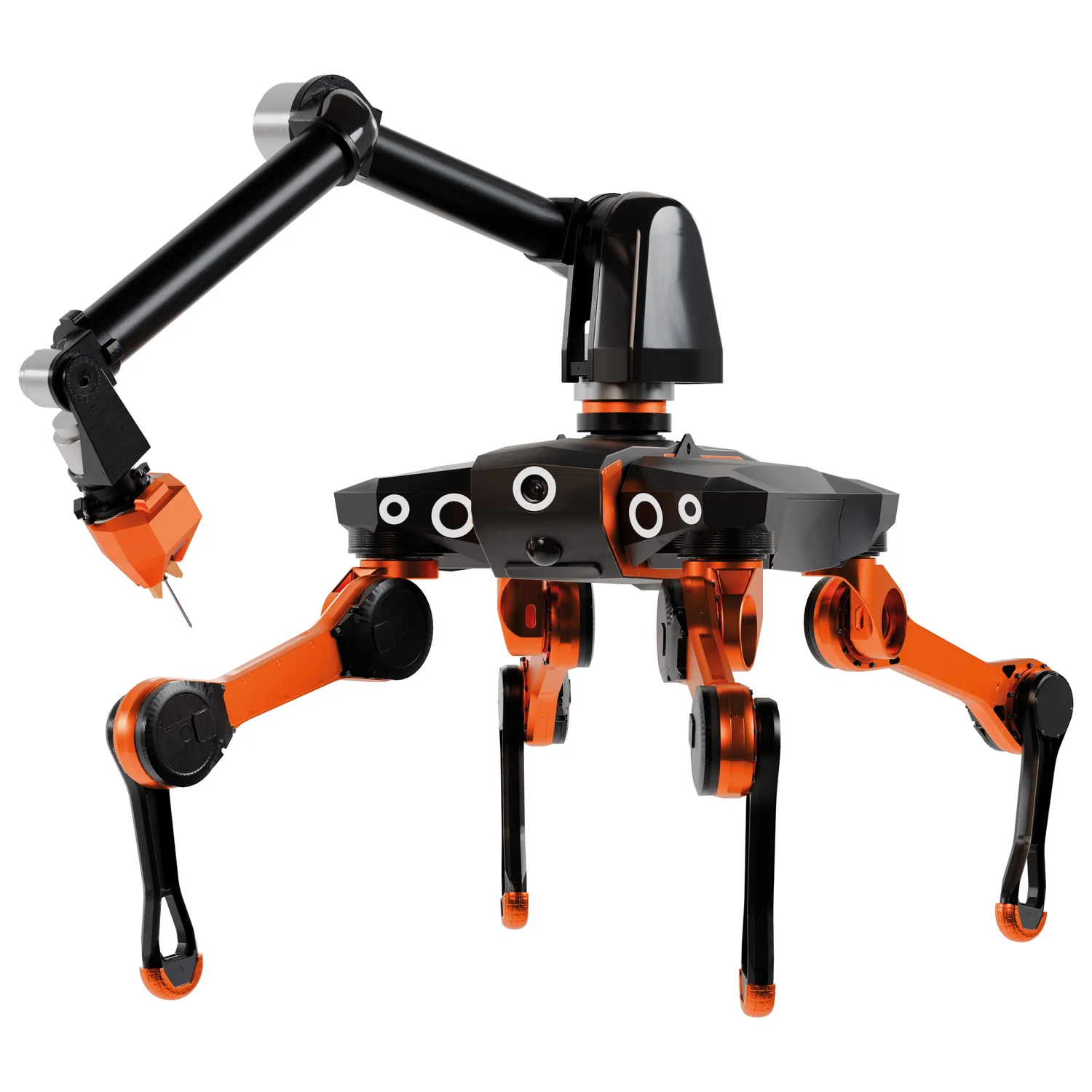
Mantis
Autonomous construction robot that assembles buildings using custom components with plug-and-play precision.
Explore Mantis